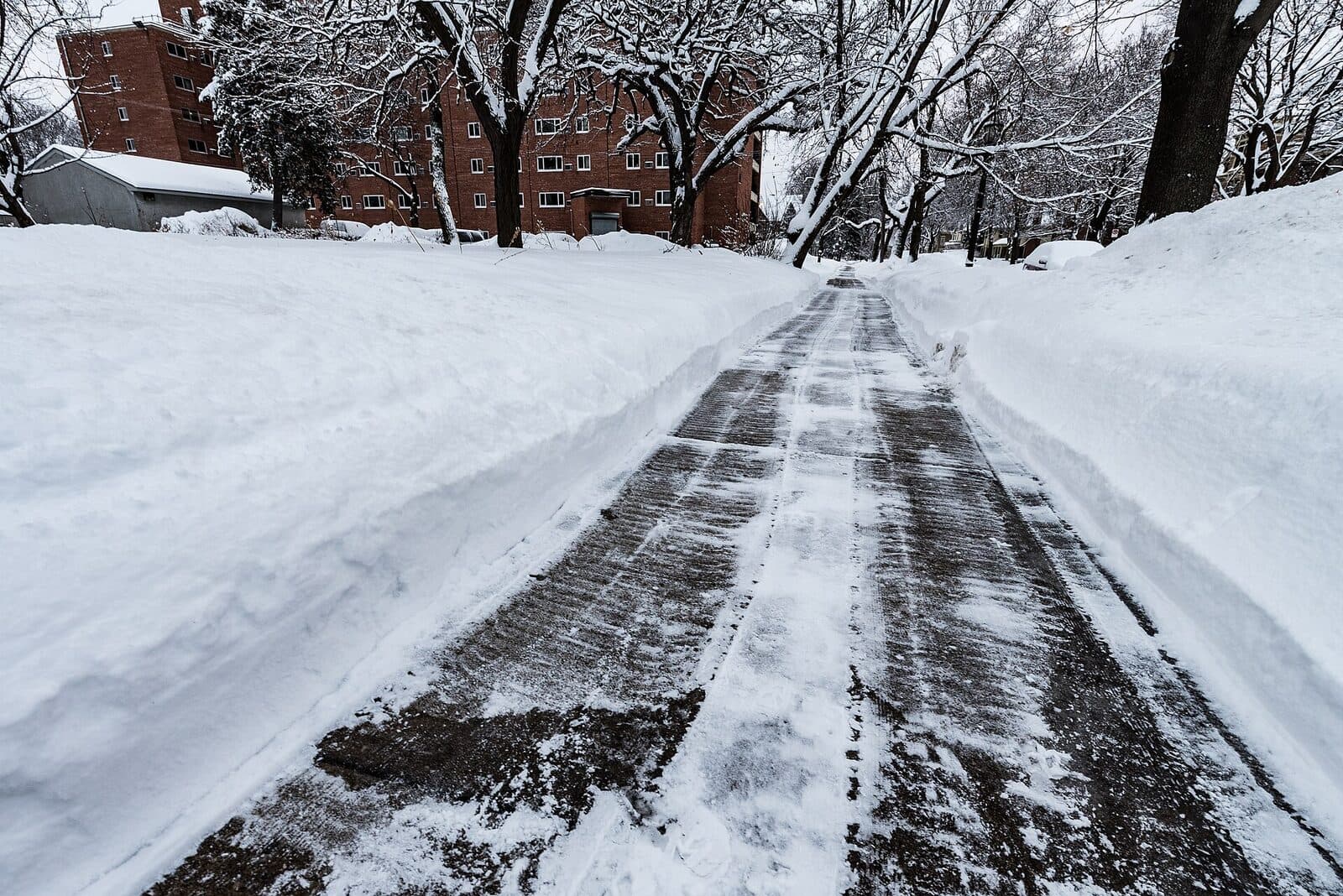
No single Tri-Cities agency plows your sidewalk. In all four cities, that job belongs to the property owner. The rules, plow priorities and parking expectations differ enough from city to city that it's worth knowing yours before the first storm rolls through.
The Tri-Cities' high-desert climate makes snow unpredictable. The region averages about seven inches a year but has seen as much as 50 inches in a heavy winter, according to Wikipedia's entry on the Tri-Cities. That swing is exactly why cities want residents ready before the ground freezes rather than scrambling mid-storm. If you haven't already handled outdoor faucets and pipes, see our freeze-prep guide, and if your furnace hasn't been serviced, line that up now too.
Sidewalks are your responsibility, not the city's
In Kennewick, city code makes it explicit: "Removal of snow from sidewalks along your home and business property is a responsibility of all citizens," according to the city's snow removal page. The city recommends shoveling right after snowfall, before it compacts into ice, and to pile the snow in your own yard, not into the street or gutter.
Pasco's municipal code spells out the same duty in more legal terms. Under PMC 12.04.140, "the duty, burden, and expense of the maintenance and cleaning (including the cleaning of snow and ice, litter and other debris), of such sidewalk shall devolve upon the owner of the private property directly abutting on the sidewalk."
Richland's ordinance, RMC 12.16.020, applies to both owners and landlords, and the city adds a practical warning: don't dump shoveled snow into the street. "When shoveling your sidewalks, please do not place snow in the street, rather in your yard or your parking lots," the city's FAQ says.
West Richland's code mirrors the others. Under WRMC 12.20.030, property owners or anyone "having charge or control" of a property bordering city right-of-way must "clean, maintain, and repair public sidewalks, driveways, or planting strips" in a safe condition.
This isn't just local custom. It's backed by state law. A 1956 opinion from the Washington Attorney General's office found that a city has authority under its police power "to pass an ordinance requiring snow removal from sidewalks and permitting the imposition of a lien on the abutting property to pay the cost of such removal in the event of failure of compliance," according to the AG opinion. None of the four cities' published pages list an exact deadline, such as "24 hours after snowfall," so the practical standard is closer to "reasonable time" than a hard clock.
How each city prioritizes plowing
Street crews don't hit every road at once, and knowing your city's order can save you a frustrating morning.
Kennewick adjusts its de-icing chemistry to the weather rather than publishing a street-by-street list: crews use a salt/deicer mix in normal conditions but switch to sand and salt "when temperatures drop below 15° F," per the city's snow page. During major storms, the city may also bring in contract labor to keep up.
Pasco is blunt about its limits. The city says its "primary responsibility" is keeping main roadways safe, not clearing every neighborhood street, and it does not plow driveways or residential sidewalks at all, according to Pasco's snow and ice FAQ. With more than 600 lane miles to cover and limited staff and equipment, residential streets fall lower on the list. The city asks residents to avoid parking in the street during storms whenever possible.
Richland starts prepping equipment before winter even arrives. "Beginning in the month of October, City staff calibrate our de-icing and snow removal equipment," and take inventory of salt, deicer, plows and other gear, per the city's FAQ. Richland plows for vehicle traffic only, not bike lanes, and asks residents with driveways to use them so plows can move faster through neighborhoods. "If you have a driveway, please use it," the city says, warning that cars left on the street may end up blocked in by plowed snow.
West Richland runs four plow-equipped dump trucks plus additional sander and deicer trucks, according to the city's snow and ice control policy. Its priority list starts with steep hill streets: Bombing Range Road, Collins Road, S. 45th Ave, Mazzard Ave and Candy Mountain Ave, cleared first because of the fall risk on grades. Arterials come next, then collector streets and school zones, and residential streets last. West Richland has also declared snow emergencies before: a 2019 mayoral proclamation under Resolution No. 9-19 cited "heavy blowing snow and impassable roads," according to MRSC's summary of local snow and ice policies.
Icy and snow-covered roads carry the same kind of visibility and traction risks that contributed to this month's dust storm pileup on SR 397, a reminder that Tri-Cities drivers face seasonal hazards well beyond summer wind events.
Before the first snow: a short checklist
- Know your city's ordinance number if you want to read the full text: Kennewick's is on the city's snow removal page, Pasco's is PMC 12.04.140, Richland's is RMC 12.16.020, and West Richland's is WRMC 12.20.030.
- Shovel sidewalks into your own yard or parking lot, never into the street.
- If you have a driveway, park in it during storms, especially in Richland and Pasco, where crews explicitly ask residents to keep streets clear.
- If you live on a steep West Richland hill street, expect earlier plowing than flatter residential blocks.
- Finish other fall prep now: aerate and overseed your lawn before irrigation shuts off, and check yard-waste pickup rules since disposal policies vary by city.
Frequently asked questions
Can I get fined for not shoveling my sidewalk? State law allows cities to enforce sidewalk snow ordinances and even place a lien on a property if an owner fails to comply, per the 1956 Attorney General opinion. None of the four cities publish a specific fine schedule or an exact hours-after-snowfall deadline on their public pages, so actual enforcement practice likely varies. Residents who want specifics should call their city's public works or code enforcement office directly.
Will the city plow my street the same day it snows? Depends on the city and the street. Pasco and West Richland both explicitly rank arterials and main roads above residential streets. Kennewick focuses on adjusting its de-icing mix rather than a published priority list. Richland plows vehicle lanes but not bike lanes, and residential streets can wait if crews are tied up on main roads.
Where should I put my car during a snowstorm? Use your driveway if you have one. Pasco says it's "greatly appreciated and encouraged" for residents to avoid street parking during storms, and Richland warns that cars left on the street risk getting blocked in once plows pass.
Does any Tri-Cities city declare snow emergencies? West Richland has, most recently in 2019 under Resolution No. 9-19, citing heavy blowing snow and impassable roads. It's unclear from public code pages whether Kennewick, Pasco or Richland maintain an active snow-emergency parking ordinance comparable to West Richland's. Residents in those cities should watch for city alerts once a major storm is forecast.