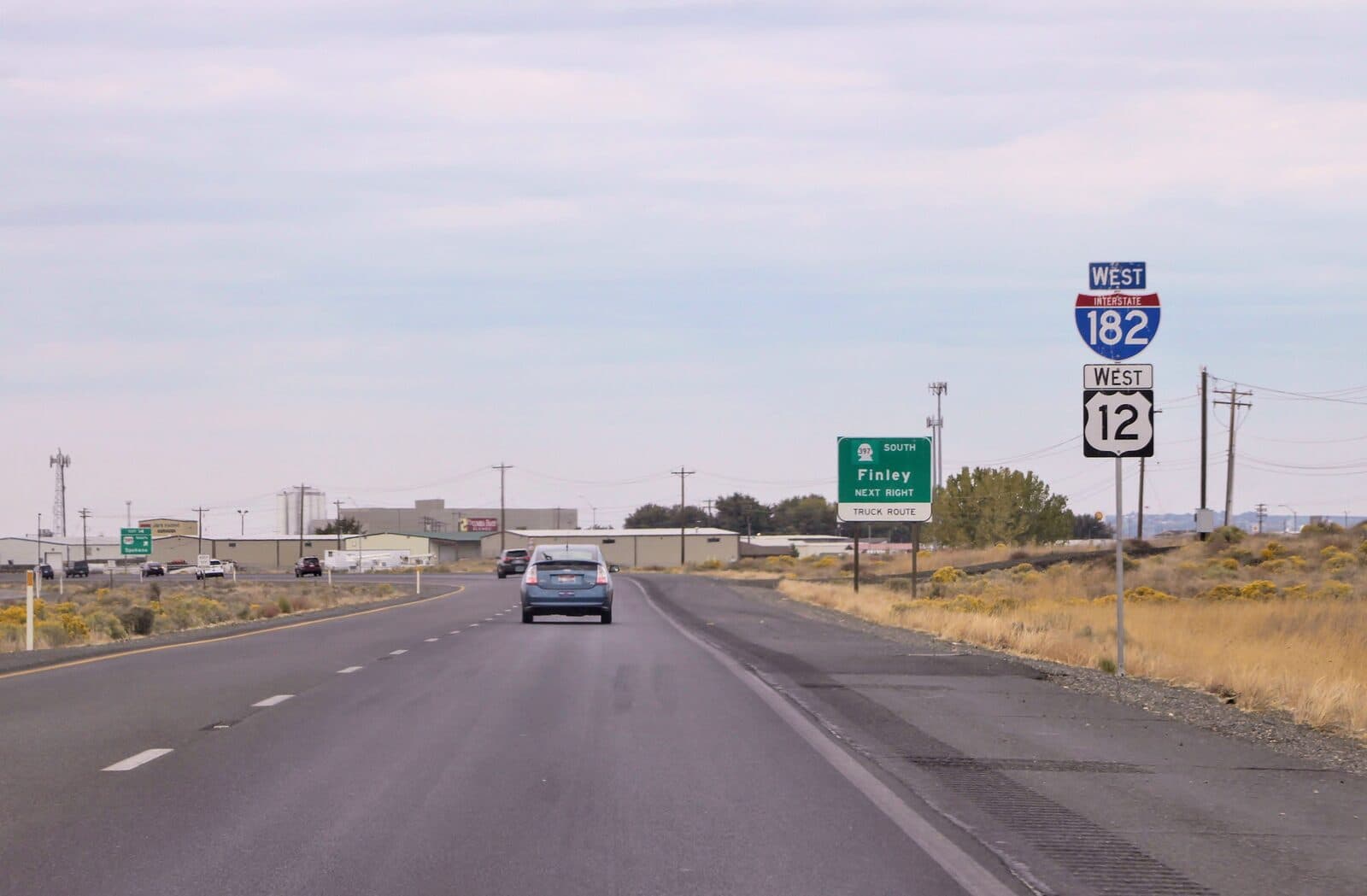
A dust storm on SR 397 south of Kennewick turned deadly last Friday when a West Richland couple's SUV crossed the center line and hit a semi-truck head-on, setting off a chain-reaction pileup that grew to roughly 12 to 15 vehicles, according to Apple Valley News Now. The victims, Radphord Howard, 84, and his wife Diana Howard, 81, were identified by the outlet, which also confirmed the crash happened just before 2 p.m. within Kennewick city limits and involved semi-trucks among the vehicles caught up in it.
The storm that caused the crash had been forecast. The Washington Department of Ecology issued a dust storm advisory for the Tri-Cities area, warning of wind gusts up to 35 mph, NBC Right Now reported. It wasn't the first time blowing dust has shut down that stretch of highway — a separate storm closed SR-397 after strong winds combined with dry, tilled agricultural land to drop visibility to dangerous levels, 97 Rock reported. A similar event caused a seven-car pileup near Richland back in March 2021, according to the Washington Department of Ecology.
For Tri-Cities residents, October is the season to worry about this. Harvest leaves fields across the Columbia Basin dry and bare just as fall wind events pick up, a combination the Benton Clean Air Agency says makes windblown dust a recurring hazard here, driven by the area's naturally dry environment and surrounding farmland. If you regularly drive SR 397, Highway 395, or other open roads between fields, here's what to do when visibility drops, and what every household should keep on hand.
What to do if you're caught driving in one
The standard guidance transportation agencies point to nationwide is Arizona DOT's "Pull Aside, Stay Alive" protocol, developed after repeated dust-related pileups on Arizona interstates and now cited by agencies across the West, according to ADOT. The steps:
- Check your surroundings immediately when you see or hear a wall of dust approaching. Don't wait until you're inside it.
- Slow down well before visibility drops. Sudden braking inside a dust cloud is how chain-reaction pileups like the one on SR 397 happen.
- Pull off the roadway as far as possible, ideally past the paved shoulder, away from the line of traffic.
- Turn off all your lights, including headlights and taillights. Other drivers can mistake your lights for lane markers in heavy dust and steer toward you.
- Keep your foot off the brake once you've stopped, since illuminated brake lights create the same false guidance for other drivers.
- Set your parking brake and keep your seatbelt on until the dust clears, in case another vehicle strikes you from behind.
Washington State Patrol has repeated this basic message after a string of crashes on other eastern Washington highways, urging drivers simply to pull over safely rather than try to push through, according to 102.7 KORD. The riskiest move is also the most common instinct: slamming on the brakes in the middle of the lane. That's what tends to trigger the pileups, since drivers behind you can't see you stop.
If you can't safely exit the roadway (for instance, if you're boxed in by other traffic), slow down gradually, turn on hazard lights, and look for any shoulder or side road rather than stopping in a travel lane.
Why the Columbia Basin is prone to this
Windblown dust isn't unusual here. The Benton Clean Air Agency notes that Benton County's combination of a naturally dry climate and heavy agricultural land use makes dust events a recurring part of the local weather pattern, not a freak occurrence. When wind gusts, like the 35 mph gusts behind last week's advisory, sweep across freshly tilled or harvested fields, they can lift enough particulate matter to push air quality past national health standards, the agency says.
That means dust storms are both a driving hazard and a breathing hazard. People with asthma, COPD or other respiratory conditions should treat a dust advisory the same way they'd treat a wildfire smoke alert: limit time outdoors, keep windows closed, and run an air purifier or your home's HVAC system on recirculate if it has one. Checking a local air quality index before heading outside, especially during an active advisory, is a reasonable habit anytime Ecology flags a dust event for the region.
Build a car kit before the next advisory
A basic kit in your trunk costs little and matters most on the exact kind of rural highway where these storms hit. Residents who commute SR 397, Highway 395 or similar stretches between Kennewick, Pasco, Richland and West Richland should keep:
- A flashlight and extra batteries
- A phone charger or battery pack
- Water and a few shelf-stable snacks
- A blanket, in case you're stopped for an extended period
- A basic first-aid kit
- An N95 or similar mask, for walking any distance in blowing dust
None of this replaces the core rule: slow down early, get off the roadway, lights off, foot off the brake, seatbelt on, and wait.
Frequently asked questions
Is there an active dust storm advisory for the Tri-Cities right now? Not as of this writing. The short-term forecast shows calm, sunny conditions. Advisories come from the Washington Department of Ecology and National Weather Service and typically surface hours to a day ahead of a wind event, so check before driving on windy days through late fall.
Why do dust storms form over Tri-Cities-area highways specifically? Open, tilled or harvested farmland bordering roads like SR 397 gives wind an easy path to pick up loose soil, especially in fall after harvest. Combine that with the Columbia Basin's naturally dry climate, and even moderate gusts can cut visibility to near zero in seconds, per the Benton Clean Air Agency.
What if I'm already stopped and another car is approaching fast? Keep your seatbelt on and stay in the vehicle. Leaving your car on an active roadway during a dust storm puts you at far greater risk of being struck than staying buckled inside it.
Has Washington State Patrol released a final cause for the SR 397 crash? Not as of this writing. Apple Valley News Now reported the investigation was ongoing, with the dust storm cited as the triggering factor in the SUV crossing the center line. Any citations or a final WSP report had not been published at the time this guide was prepared.
For background on the crash itself, see our earlier coverage: Dust storm triggers fatal 12-vehicle pileup on SR 397, kills West Richland couple.