
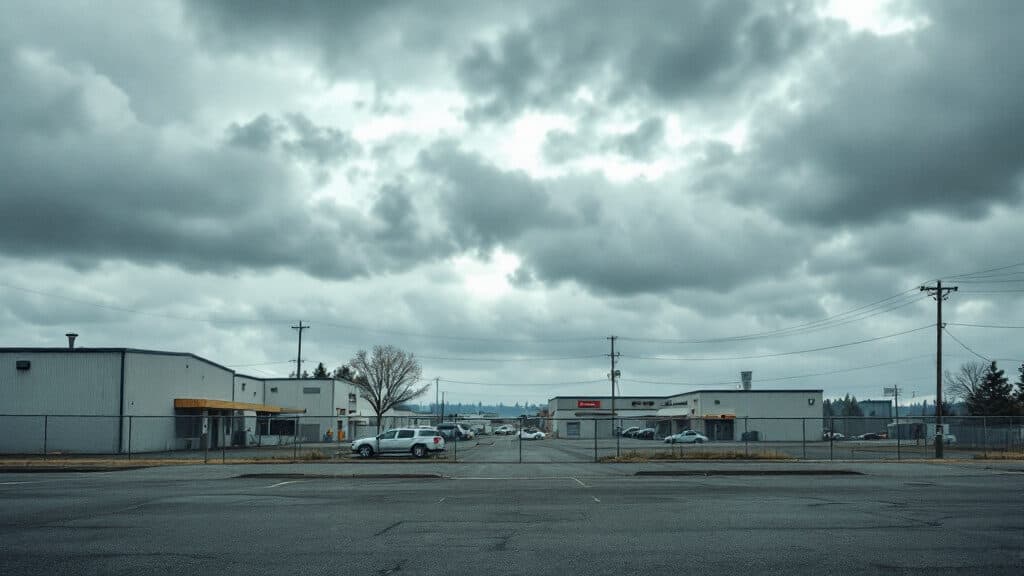
Kennewick's City Council reviewed draft rules this week that would limit where sex offender transitional housing can go, confining it to the city's heavy and light industrial zones as a six-month moratorium nears its Dec. 19 expiration.
The draft, discussed at a council workshop, would require a conditional use permit for any Less Restrictive Alternative (LRA) or Secure Community Transition Facility — the state's terms for housing that places certain registered sex offenders back into the community. That means city planning review, a public hearing before Kennewick's hearing examiner, and mandatory notice to residents within 300 feet of a proposed site, according to AppleValleyNewsNow.
The ordinance also sets a 500-foot buffer between any proposed facility and "risk-potential" sites — playgrounds, bus stops, day cares, churches, schools, parks and libraries. Combined with the industrial-zone restriction, that buffer leaves roughly 720 acres eligible citywide, about 4% of Kennewick's total land area.
Applicants would have to show compliance with state security standards — commercial-grade security systems, backup power, GPS monitoring of residents and site-obscuring fencing — submit a community safety plan developed with Kennewick police and fire, and win approval from both the city and the state Department of Social and Health Services.
Why the city can't just ban it
Deputy City Manager Lisa Beaton told the council the city's hands are partly tied by state law, which classifies these facilities as "essential public facilities" that cities cannot prohibit outright.
"As an essential public facility, we can't completely prohibit this use," Beaton said, according to AppleValleyNewsNow. "But we're allowed to regulate it. But we need to be measured in what we do with respect to regulations."
Councilmember Loren Anderson pressed Beaton on whether the state could later argue Kennewick's rules are so restrictive they amount to a de facto ban. Beaton said she believed the industrial lots left available, even with the buffers, provide enough adequate property to site the housing legally.
What happens next
The draft goes to Kennewick's Planning Commission for a hearing Nov. 3, then returns to the City Council for a final vote Dec. 15, four days before the current moratorium runs out, according to the Tri-City Herald, via Yahoo News. The Washington Department of Commerce is expected to weigh in before the planning commission hearing, and it's not yet clear whether the state will object that the rules go too far. Language in the draft could still change before the council's Dec. 15 vote.
How the moratorium started
Kennewick's council passed the emergency moratorium unanimously after a proposed LRA at 8th Avenue and Edison Street drew months of protests, town halls and a vandalism incident at the site, AppleValleyNewsNow and NBC Right Now reported at the time. That plan was eventually scrapped after a private buyer purchased the property, NBC Right Now reported. Pasco, Richland, West Richland and Yakima have since passed similar moratoriums as cities coordinate a regional response.
Kennewick has also pushed for a state-level fix, including siting-law reforms on its 2027 legislative wishlist, according to the Tri-City Herald, via AOL.
The issue has also surfaced in this fall's 8th District state Senate race. Sen. Nikki Torres, in a candidate questionnaire reported by the Tri-City Herald, via Yahoo, said "too often the state places high-risk offenders into communities with little notice and little input from local officials, law enforcement or residents." Her opponent, Gabe Galbraith, has also called for more local control and earlier notice from the state, the Herald reported.
Residents who want to weigh in have two chances on the calendar: the Planning Commission hearing Nov. 3 and the City Council's final vote Dec. 15. Whether an operator or property owner has already identified a specific industrial site under the new rules has not been disclosed.